
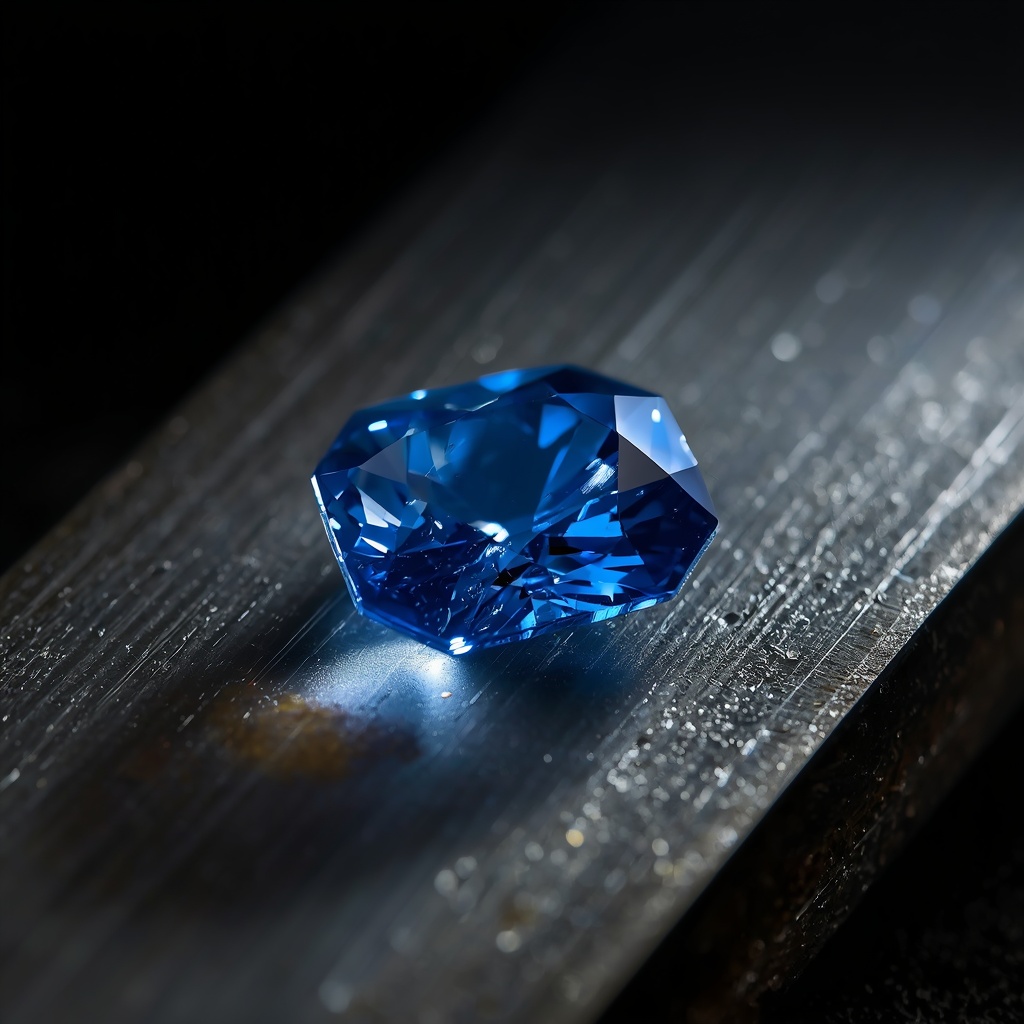
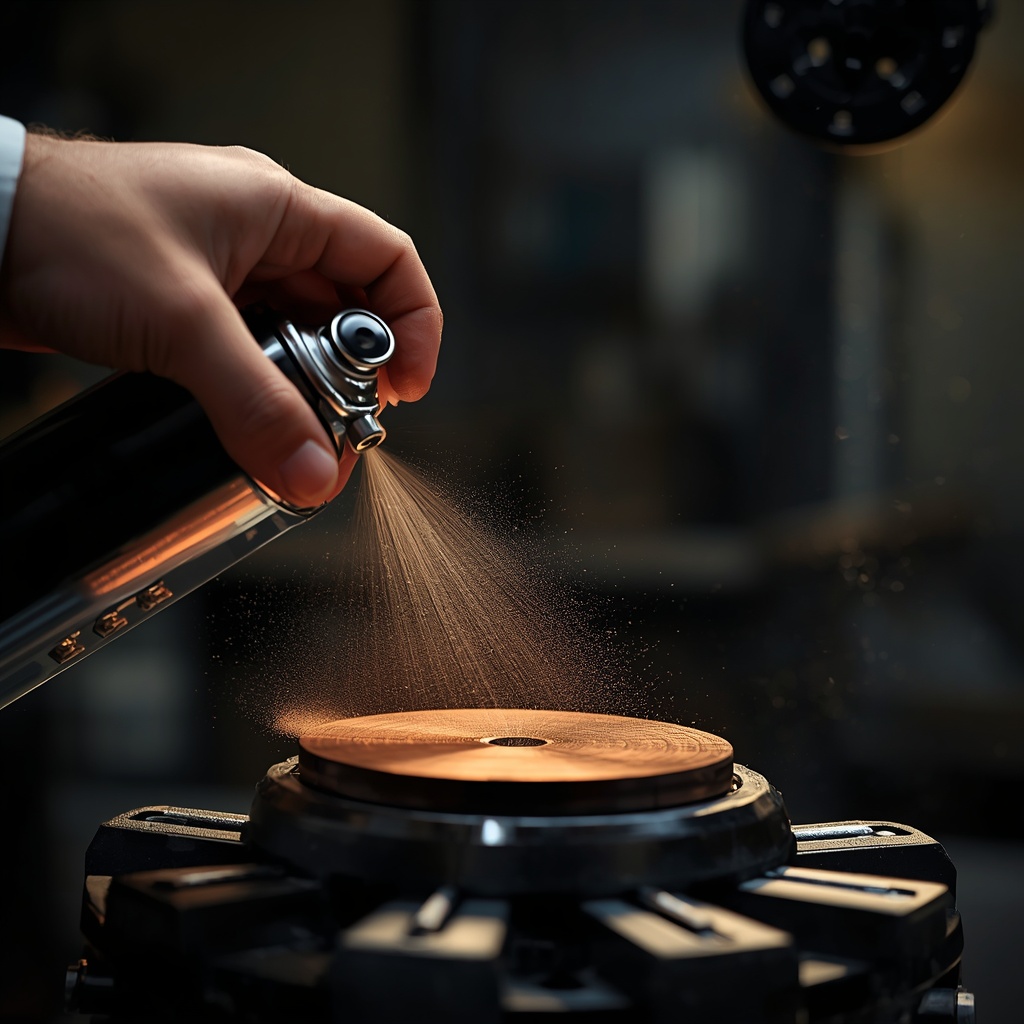

: Diamond Spray for Lapidary Polishing — Professional Micron-Graded Diamond Polish for Faceters and Gem Cutters
$24.95
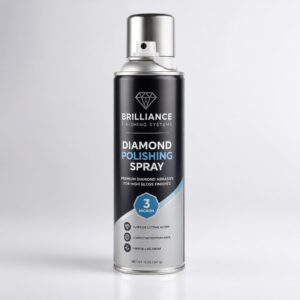
Buy diamond spray for lapidary polishing and experience the difference that calibrated micron-graded diamond particles make on every surface you finish. This professional-strength diamond polishing spray delivers a uniformly dispersed suspension of synthetic diamond compound onto laps, ceramic discs, leather, and composite surfaces, producing mirror-quality finishes that coarser abrasives simply cannot achieve. Formulated for consistent particle distribution and extended working time, this spray is an essential tool for faceters, cabochon cutters, and gem polishers who refuse to compromise on final-finish quality. Stock is limited at this price. Add yours to cart now and finish every stone to perfection.
: Diamond Spray for Lapidary Polishing — Professional Micron-Graded Diamond Polish for Faceters and Gem Cutters – diamond spray for lapidary polishing
 The Investment Asset and Provenance
Diamond spray for lapidary polishing occupies a specialized and irreplaceable position in the serious gem cutter’s consumable toolkit. Unlike conventional polishing compounds that rely on aluminum oxide, cerium oxide, or tin oxide chemistry, a properly formulated diamond spray delivers the hardest known abrasive material in a precisely engineered suspension, making it effective on virtually every gemstone species in the Mohs hardness spectrum from quartz through corundum and beyond. This universal applicability is one of the primary reasons professional faceters and cabochon artists keep diamond spray for lapidary polishing as a permanent fixture in their studio inventory rather than treating it as an occasional specialty product.
The formulation available here comes from a manufacturing tradition that serves the gemological, optical, and precision engineering industries simultaneously. Diamond spray at this level of quality is not a consumer craft product. It is produced under controlled conditions where particle sizing is verified, suspension chemistry is stabilized for long shelf life, and micron grading is confirmed before the product leaves the production facility. When you apply diamond spray for lapidary polishing from a professionally graded source, you are working with the same category of abrasive technology used in gemological laboratories and university mineralogy departments around the world.
Provenance in the consumables category means knowing exactly what micron rating you are purchasing, trusting that the stated particle concentration is accurate, and having confidence that the carrier fluid will not contaminate your lap surface or react negatively with your dopping compounds. This product meets all three of those standards, and the documentation supporting its formulation specification is available to trade and institutional buyers upon request.
Condition Metrics and Product Specifications
Diamond spray for lapidary polishing is a precision consumable rather than a mechanical unit, so the relevant quality metrics shift from wear assessment to formulation accuracy, concentration integrity, and packaging condition. Every batch of this spray is evaluated against those criteria before it is made available in our store, and the results of that evaluation inform the specification breakdown presented here.
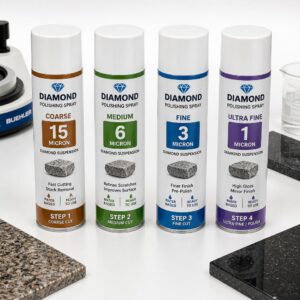
Micron Grade: This diamond spray is available in clearly labeled micron grades corresponding to specific stages of the polishing sequence. The micron rating printed on each unit accurately reflects the median particle diameter in the suspension as verified against the manufacturer’s production specification. Common grades available include fifty micron for initial pre-polish cutting, fourteen micron for intermediate surface refinement, eight micron for pre-polish preparation, three micron for fine pre-polish work, one micron for near-mirror finish development, and one-quarter micron for final mirror polish on demanding gemstone species.
Suspension Chemistry: The carrier fluid used in this diamond spray for lapidary polishing is a water-soluble, alcohol-assisted suspension medium engineered to keep diamond particles in uniform dispersion between applications without settling into a dense layer at the bottom of the canister. The chemistry is compatible with all standard lap materials including copper, tin alloy, ceramic, phenolic resin, leather, and composite polymer surfaces.
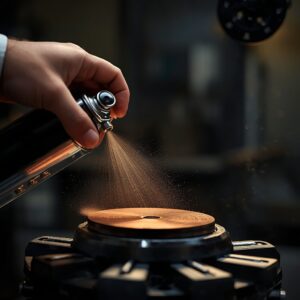
Particle Concentration: Particle concentration per milliliter of spray has been formulated to deliver an economical working ratio that produces effective cutting and polishing action without wasting material through oversaturation of the lap surface. A single short burst from the spray nozzle delivers the correct working quantity for a standard six-inch or eight-inch lap, making this product genuinely economical in day-to-day studio use.
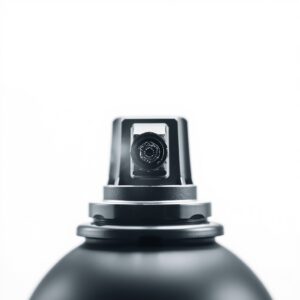
Packaging and Delivery System: The spray canister uses a precision mist nozzle rather than a coarse stream delivery head, ensuring that diamond spray for lapidary polishing is deposited as a fine, even aerosol across the target surface rather than pooling in a single wet zone. The canister valve is designed to resist clogging between sessions and can be cleared with a single wipe if dried suspension accumulates around the nozzle tip.
Shelf Life and Storage: When stored upright in a cool, dry environment away from direct sunlight and temperature extremes, this diamond spray for lapidary polishing maintains full particle suspension integrity and abrasive performance for a minimum of three years from the production date printed on the canister base. Buyers purchasing multiple units for studio inventory can do so with confidence that the product will perform identically when opened months after initial purchase.
Secure Vault Logistics and Our Fulfillment Guarantee
Shipping precision lapidary consumables requires attention to packaging integrity, temperature stability during transit, and regulatory compliance for aerosol or chemical products where applicable. This diamond spray for lapidary polishing is packaged individually in protective outer packaging that prevents nozzle depression during transit, guards against canister damage from impact, and satisfies carrier requirements for the product category.
All orders ship with full declared value coverage through our insured freight arrangement with our carrier partners. Delivery is completed on a signature-required basis, establishing a confirmed chain of receipt that protects the buyer and supports any damage or non-delivery claim process. In the event that a canister arrives damaged, leaking, or with a compromised nozzle mechanism, our damage claim process is initiated within twenty-four hours of the buyer’s notification and replacement or refund is processed without requiring the buyer to navigate carrier bureaucracy independently.
Before any order of diamond spray for lapidary polishing leaves our facility, it passes a pre-shipment functional inspection that confirms nozzle operation, checks canister pressure, verifies that labeling is legible and accurate, and confirms that the product matches the micron grade ordered. This step exists because a mislabeled or pressure-compromised canister that reaches your studio and contaminates a lap sequence with the wrong particle size is a costly error that our inspection protocol is specifically designed to prevent.
Buyers building a complete professional polishing system are encouraged to explore the full range of diamond abrasives, polishing laps, and faceting accessories available at https://lapidaryhub.com/product-category/faceting-machines/ where this diamond spray for lapidary polishing is listed alongside compatible equipment and complementary consumables for every stage of the gem-cutting process.
diamond spray for lapidary polishing-Frequently Asked Questions
What micron grade of diamond spray should I start with if I am new to diamond polishing?
Most faceters and cabochon cutters begin their diamond polishing sequence between eight micron and fourteen micron depending on the scratch depth left by their last abrasive lap. If you are transitioning from a one-thousand-grit silicon carbide or aluminum oxide stage, a fourteen micron diamond spray for lapidary polishing is the appropriate entry point. From there you work progressively through eight micron, three micron, and one micron before applying a final quarter-micron pass for mirror finish on hard gemstone species like sapphire, ruby, and chrysoberyl.
Can I use diamond spray on all types of polishing laps?
Yes. This diamond spray for lapidary polishing is formulated to be compatible with copper laps, tin-alloy laps, ceramic laps, phenolic resin laps, leather laps, and composite polymer laps. The suspension carrier is pH-neutral and does not react chemically with any of these standard lap materials. The only surface category that requires caution is wax-charged laps, where excess fluid application may temporarily soften the wax matrix, so a lighter spray application is recommended in that case.
How many carats of gemstone material can I polish with a single canister?
Canister yield depends on gemstone hardness, lap surface area, and operator technique. A disciplined faceter using short single-burst applications on a standard eight-inch lap can typically polish between forty and eighty finished gemstones per canister at the one micron grade level, with coarser grades yielding more stones per canister because they are used in shorter sequences before advancing to the next stage. Using diamond spray for lapidary polishing efficiently means applying less than most beginners expect and allowing the lap to distribute the charge evenly before adding more.
Is this diamond spray safe to use indoors without special ventilation?
The carrier fluid in this formulation is low-volatility and does not produce hazardous vapor concentrations under normal studio use conditions. Standard lapidary workshop ventilation that you would use for any wet cutting or polishing operation is sufficient. The product safety data sheet is available upon request and confirms that no special respiratory equipment is required for typical intermittent spray applications in a normally ventilated workspace.
Can diamond spray be used on a flat lap machine as well as a faceting machine?
Absolutely. Diamond spray for lapidary polishing is equally at home on flat lap grinding and polishing machines used for cabochon work, intarsia, and slab finishing as it is on faceting machine laps. The aerosol delivery format is particularly well suited to flat lap use because it allows the operator to charge the entire lap surface evenly in a single application pass, something that paste compounds often make more difficult to achieve uniformly across larger diameter surfaces.
Does diamond spray leave any residue on finished gemstones?
The carrier fluid evaporates cleanly from polished gemstone surfaces without leaving a film, residue, or haze when the stone is rinsed with clean water and dried with a lint-free cloth after the final polishing stage. This clean release characteristic is one of the reasons professional faceters prefer diamond spray for lapidary polishing over oil-based diamond compounds at the final polish stage, because oil-based carriers can leave a temporary surface film that masks the true brilliance of the finished facet until fully degreased.
Only logged in customers who have purchased this product may leave a review.
Related products
Polishing Supplies
Polishing Supplies
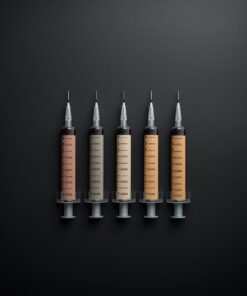
Diamond Paste 5g Syringe — Monocrystalline Polishing Compound for Lapidary and Precision Finishing

Faceting Machines
Professional Dop Stick Set — Precision Lapidary Holding Tools for Faceting and Cabbing
Reviews
There are no reviews yet.