
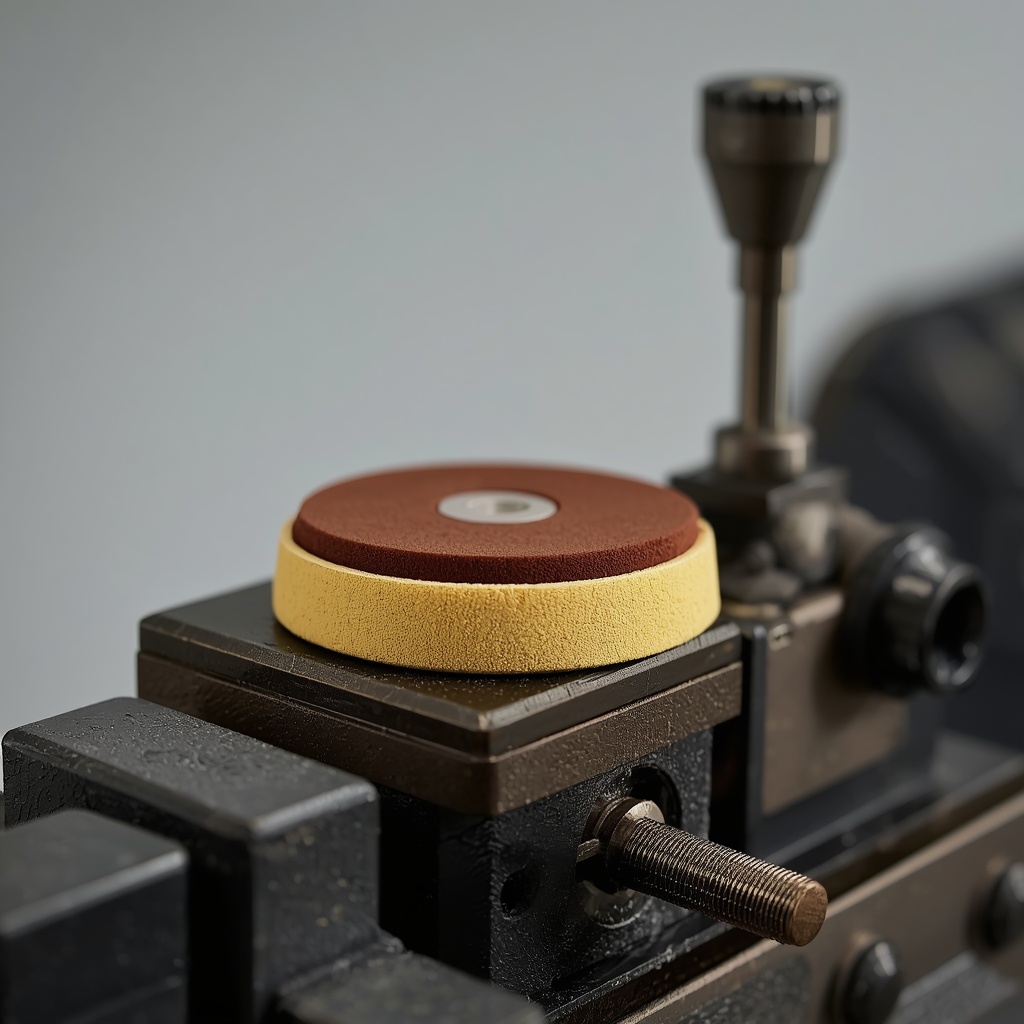
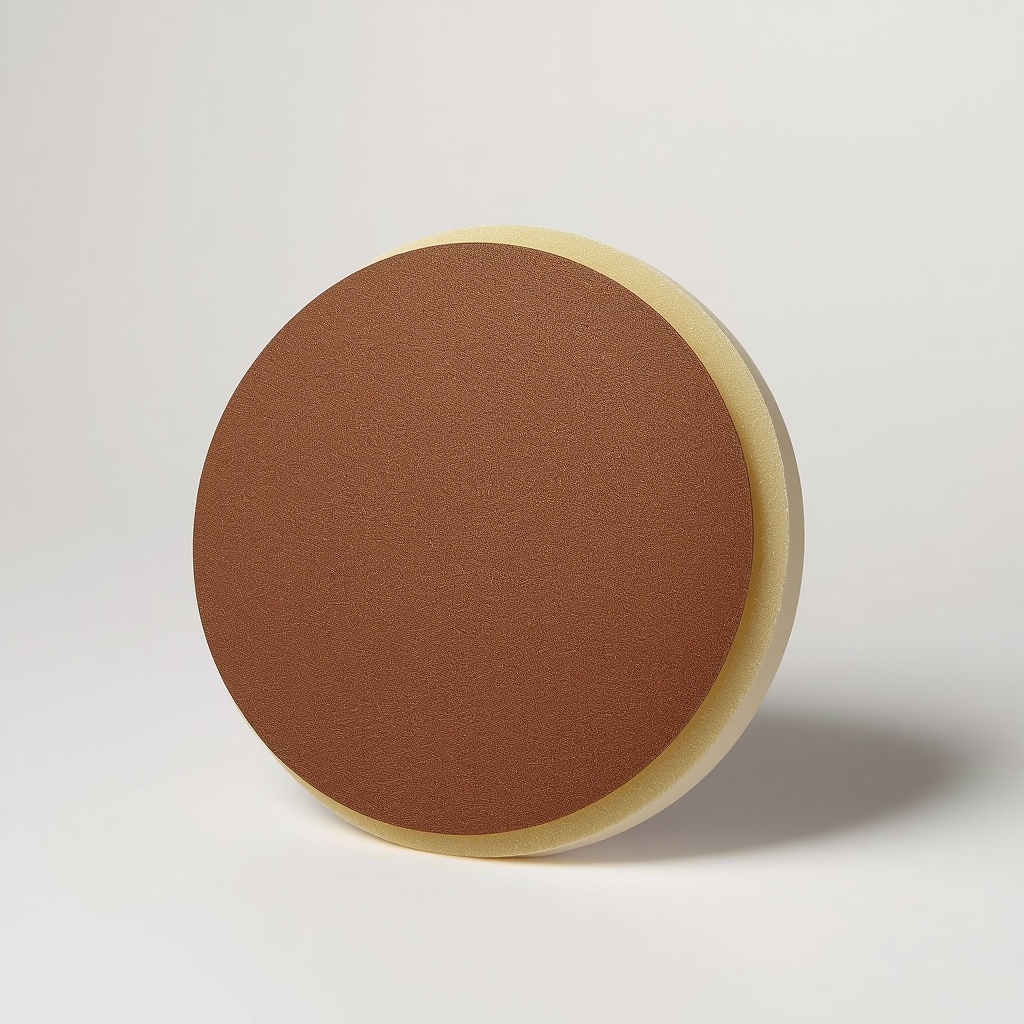
Leather Polishing Pads for Lapidary — Professional Gem Finishing Laps for Faceting Machines

$14.95
Buy leather polishing pads designed for professional lapidary finishing and experience the difference that genuine leather surface texture makes on your final gemstone polish. These premium leather polishing pads deliver the ultra-fine abrasive control that competition faceters and studio gemologists demand, producing mirror-bright surfaces on a wide range of gem materials including quartz, corundum, and feldspar. Each pad is cut and finished to exacting dimensional tolerances ensuring a flat, true running surface from first use. Stock at this price and quality level moves quickly. Add yours to your cart now and finish your next stone to exhibition standard.
leather polishing pads for lapidary-Leather Polishing Pads for Lapidary — Professional Gem Finishing Laps for Faceting Machines
 The Investment Asset and Provenance
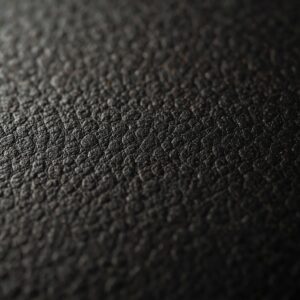
Leather polishing pads occupy a foundational role in the serious lapidary studio because no synthetic alternative has yet replicated the micro-porous surface behavior of genuine leather under final polish conditions. The natural fiber structure of vegetable-tanned or chrome-tanned leather holds polishing compounds such as cerium oxide, chromium oxide, and alumina in a controlled suspension that releases abrasive particles progressively as the lap rotates beneath a faceted stone. This progressive release mechanism is precisely what separates a leather polishing pad from felt, tin oxide cloth, or other finishing media, and it is what allows a skilled faceter to achieve a true optical polish that reads cleanly under gemological loupe magnification.
The tradition of using leather in precision polishing applications predates modern lapidary equipment by centuries, with leather strops appearing in optical lens grinding workshops and clockmaker finishing benches long before synthetic abrasive laps became commercially available. That heritage of performance is not incidental. Leather polishing pads earn their place in the professional toolkit because they work at a mechanical and chemical level that synthetic alternatives approach but rarely equal, particularly on softer gem materials where aggressive synthetic surfaces can introduce surface stress or micro-fracture patterns invisible to the naked eye but detrimental to long-term gem stability.The leather polishing pads offered here come from a supply chain focused on lapidary-grade material, meaning the leather has been selected and processed specifically for use as a polishing surface rather than repurposed from footwear or upholstery stock. This distinction matters because lapidary-grade leather is evaluated for consistent thickness, uniform surface grain, and the absence of natural hide defects that would create inconsistent polish results across the lap surface. Buyers at the professional level deserve that sourcing transparency, and it is reflected in the quality of finish these pads consistently deliver in working studio conditions.
Condition Metrics and Pad SpecificationsThese leather polishing pads are offered in new or professionally evaluated pre-owned condition as stated in the individual product listing, and every pad presented for sale has been assessed against a consistent set of performance criteria before being made available. The specification breakdown below covers every meaningful technical parameter that affects polishing performance so that buyers can evaluate this product with full confidence.
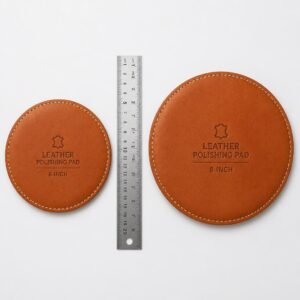
Material Composition: The pad surface is genuine leather, vegetable or chrome tanned depending on the specific variant listed, with a backing layer bonded using a solvent-resistant pressure-sensitive adhesive rated for continuous wet-use environments. The leather layer thickness is consistent across the pad face to within manufacturer tolerance, ensuring that the polishing surface runs true without high or low spots that would cause uneven compound distribution.Pad Diameter and Compatibility: These leather polishing pads are available in the six-inch and eight-inch diameter formats that are standard across all major professional faceting machine platforms. The center hole diameter and any keyway features are dimensioned to fit standard lap arbors without modification, allowing direct drop-in installation on compatible machines including most North American and European professional units currently in active studio use.Surface Condition: The working leather surface is free of cuts, deep abrasion marks, embedded grit contamination, or delamination at the leather-to-backing interface. A leather polishing pad that has been previously charged with a polishing compound is noted as such in the individual listing, with the compound type identified so that buyers can assess cross-contamination risk for their intended gem materials.
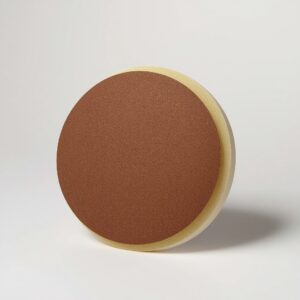
Backing and Adhesive System: The adhesive backing maintains full bond strength across the pad face with no lifting, bubbling, or edge separation present. The backing material is dimensionally stable and will not warp or curl during normal wet polishing conditions, ensuring that the pad seats flat on the lap platen throughout an extended cutting and polishing session.Rotational Trueness: Each leather polishing pad offered here has been checked for rotational flatness using a dial indicator method. Runout is confirmed to be within acceptable professional tolerance, meaning the pad surface does not wobble or oscillate when rotating at normal polishing speeds, a condition that would otherwise cause inconsistent facet contact and degrade the quality of the final polish.
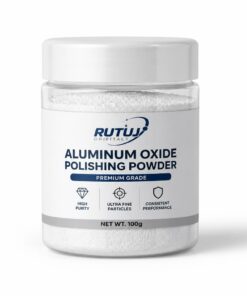
Compound Compatibility: These leather polishing pads are compatible with all standard dry and wet polishing compounds used in professional lapidary finishing including cerium oxide, chromium oxide, diamond powder suspensions in appropriate carriers, and alumina-based final polish preparations. Buyers should charge the pad with a single compound type and dedicate that pad to that compound to avoid cross-contamination between polishing stages.Secure Vault Logistics and Our Fulfillment GuaranteeLeather polishing pads may appear to be a simple consumable item compared to a full faceting machine, but their performance depends entirely on arriving at your studio in undamaged, uncontaminated condition, and our packaging and logistics process is designed around that requirement.
Every order is packed in a rigid protective sleeve or hard-shell mailer that prevents the pad face from being compressed, creased, or exposed to foreign abrasive contamination during transit. Pads are never stacked face-to-face without a protective interleaf layer, and the outer packaging is moisture-resistant to protect the leather from transit humidity exposure.All orders ship with full insured freight coverage applied at declared replacement value, and delivery is completed on a signature-required basis to ensure that the package is received by an authorized person at your address rather than left unattended. A pre-shipment inspection is conducted on every order before packing, confirming that the pad or pads leaving our facility match the condition described in this listing. Photographs of the pad surface and backing are retained on file for every shipment as part of our standard documentation protocol.
In the rare event that damage occurs during transit, our damage claim process is initiated within twenty-four hours of your notification to us. We maintain all shipment records, packaging photographs, and carrier documentation needed to file and support a successful claim on your behalf. Our commitment is straightforward: the leather polishing pads that leave our facility in verified condition are the pads that arrive ready to charge with your chosen compound and begin producing professional-quality polish results immediately.Buyers building a complete finishing station are encouraged to explore the full range of lapidary polishing supplies and compatible faceting equipment available at https://lapidaryhub.com/product-category/faceting-machines/ where additional pads, compounds, laps, and professional machines are listed alongside these leather polishing pads.
leather polishing pads for lapidary-Frequently Asked Questions
What polishing compounds work best with leather polishing pads?
Leather polishing pads are compatible with cerium oxide, chromium oxide, alumina, and fine-mesh diamond powder suspensions. The best compound for your pad depends on the gem material you are finishing. Cerium oxide is the most widely used choice for quartz and glass-type materials, chromium oxide produces excellent results on peridot and softer silicates, and alumina works well as a final refinement step on many medium-hardness stones. Always dedicate a separate leather polishing pad to each compound to prevent cross-contamination between polishing stages.Can leather polishing pads be cleaned and recharged after use?
Yes, leather polishing pads can be carefully cleaned between compound charges using a soft brush and clean water to remove spent compound residue from the surface pores. Allow the pad to dry fully in a horizontal position before recharging with fresh compound. Avoid soaking the pad or using solvents, as these can degrade the adhesive bond between the leather and backing layer. A well-maintained leather polishing pad can deliver many productive polishing sessions before requiring replacement, making it one of the most cost-effective investments in a professional lapidary finishing setup.What gem materials are suitable for finishing on a leather polishing pad?
Leather polishing pads perform exceptionally well on a broad range of gem materials. They are particularly effective on quartz varieties including amethyst, citrine, and rock crystal, on feldspar group stones such as labradorite and moonstone, on peridot, apatite, and other mid-range hardness gems, and on softer collector minerals where synthetic laps can be too aggressive. For corundum and spinel at the harder end of the Mohs scale, leather polishing pads used with fine alumina or diamond suspension deliver clean optical polish results when the pre-polish stage has been properly completed on an appropriate pre-polish lap.
Are these leather polishing pads compatible with my faceting machine?
These leather polishing pads are produced in the standard six-inch and eight-inch diameter sizes that fit the vast majority of professional faceting machines currently in use worldwide. They are compatible with American-style machines including Graves, Ultra Tec, and Facetron platforms as well as most European professional units. The center arbor hole is dimensioned to standard specifications. If you are using a less common machine with a non-standard arbor configuration, please contact us before purchasing and we will confirm compatibility or advise on any simple adapter solution.How should leather polishing pads be stored when not in use?
Store leather polishing pads flat in a clean, dry location away from direct sunlight and temperature extremes. If the pad has been charged with a compound, allow it to dry naturally before storing and place a sheet of clean paper or a lint-free cloth over the surface to prevent dust and airborne grit from settling into the charged leather. Never store pads stacked face-to-face without a protective interleaf. Proper storage extends pad life significantly and ensures that the leather surface remains in optimal condition for your next polishing session.What is the difference between leather polishing pads and felt or tin oxide polishing laps?
Leather polishing pads differ from felt and tin oxide laps primarily in surface porosity and compound retention behavior. Leather holds polishing compounds in a micro-porous matrix that releases abrasive particles progressively under pressure, which produces a more controlled and gentle polishing action ideal for achieving true optical clarity on facet surfaces. Felt laps tend to hold compound more aggressively and can produce faster but sometimes less refined results. Tin oxide laps are fixed-abrasive surfaces that offer consistent cut rate but less flexibility for compound switching. For final polish stages where surface quality is the priority over cutting speed, leather polishing pads are the preferred choice among professional and competition faceters.
Only logged in customers who have purchased this product may leave a review.
Related products
Polishing Supplies

Reviews
There are no reviews yet.