
Professional Dop Wax for Gem Faceting and Cabochon Cutting
$9.95
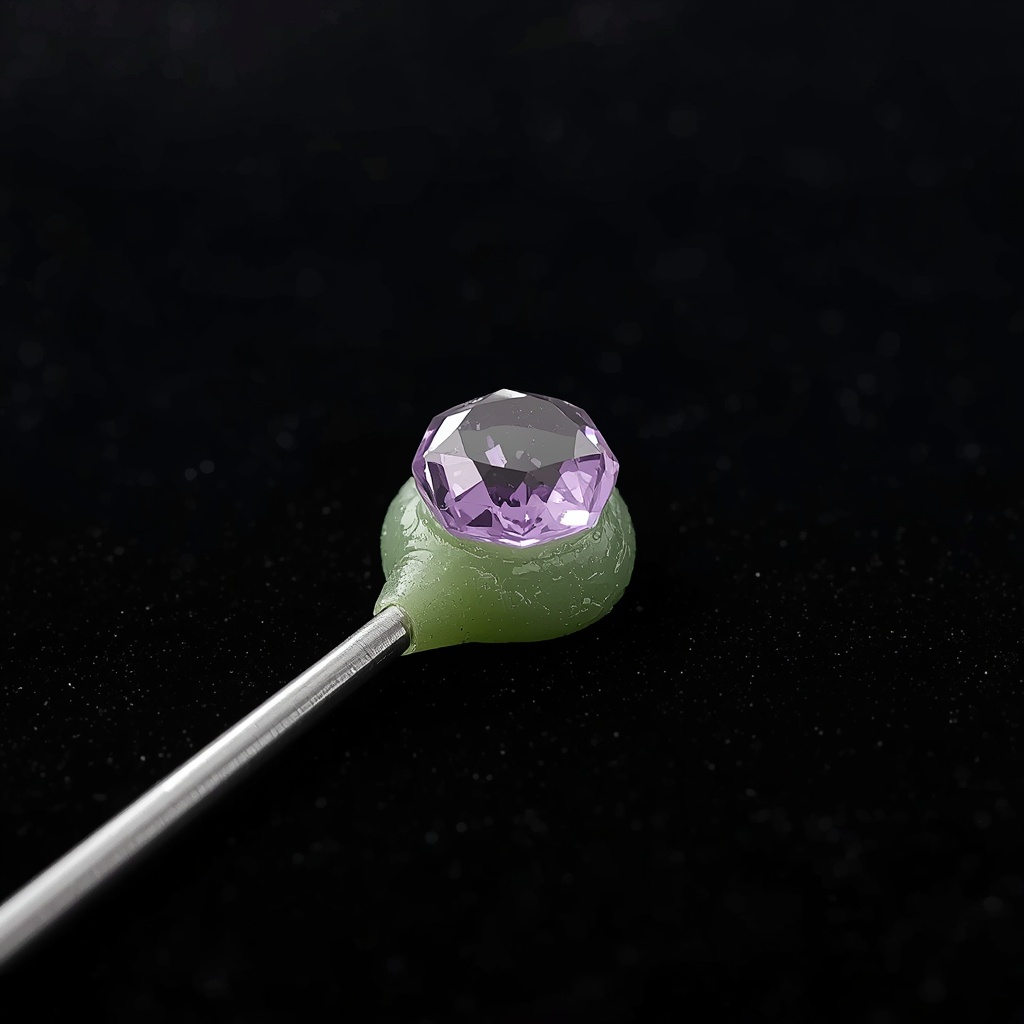
Buy professional lapidary dop wax and secure your gemstones with confidence during every faceting and cabochon cutting session. This premium dop wax for gem faceting delivers superior adhesion, clean release, and consistent melt temperatures that professional lapidaries and serious hobbyists demand. Each batch is formulated to grip dopping sticks firmly while protecting delicate stone surfaces from heat stress. Whether you are working with quartz, tourmaline, or precious corundum, this wax ensures your stones stay locked in position from first cut to final polish. Quantities are limited, so add this essential lapidary supply to your cart today and keep your bench running without interruption.
dop wax for gem faceting
dop wax for gem faceting – Professional Dop Wax for Gem Faceting and Cabochon Cutting
 Dop Wax for Gem Faceting: The Lapidary Bench Essential That Serious Cutters Trust
 Dop Wax for Gem Faceting: The Lapidary
 Every faceted gemstone and hand-cut cabochon that earns admiration at a gem show, commands a premium in a jewelry showcase, or survives the scrutiny of a gemological appraisal has one invisible factor in common: the quality of the bond that held the rough stone in place during every grinding and polishing pass. That bond is created by dop wax, and the grade of wax you choose is not a minor detail. It is a foundational variable that determines whether your alignment holds through aggressive pre-forming, whether your stone releases cleanly without fracturing at the girdle, and whether the heat you apply to remelt the wax respects or destroys inclusions, treatments, or fracture-filled zones in sensitive material. Premium dop wax for gem faceting is, in this respect, as important to the finished result as the quality of your lap surface or the precision of your angle settings. Lapidary Hub stocks this material because experienced cutters have long understood what beginners learn the hard way: economy wax costs far more in ruined stones than the price difference ever saves.
The tradition of dopping gemstones for cutting stretches back centuries. Early lapidaries used pine pitch, shellac, and natural resins to bond rough material to wooden sticks before grinding against sandstone wheels or leather laps charged with abrasive compounds. As the craft professionalized through the nineteenth and twentieth centuries, formulators developed synthetic wax blends calibrated to specific melt temperatures, adhesion strengths, and thermal expansion coefficients. Today, the finest dop wax for gem faceting is a precision material, not a commodity. The wax you apply to the end of your dopping stick is expected to melt uniformly at a controlled temperature, flow smoothly around the pavilion of a preform without introducing air pockets, grip the stone as it cools without cracking or pulling under rotational stress, and release when you are ready for transfer dopping without leaving residue that contaminates your transfer adhesive or scratches a polished table. Meeting all of those performance criteria simultaneously requires careful formulation, and that is what distinguishes the product available here from generic hobby-store alternatives.
This listing is appropriate for faceting artists working across all skill levels who are ready to stop tolerating inconsistent adhesion and start relying on a material that performs the same way every session. It is equally relevant to cabochon cutters who work with dopping sticks and flat-lap machines, to wire-wrap artists who need precisely shaped cabs that can only be achieved when the stone never shifts during grinding, and to lapidary instructors who want a single reliable wax they can teach students to use correctly without workarounds. Dop wax for gem faceting at this quality level is a professional standard, and that standard is what this product delivers.
The Investment Asset and Provenance
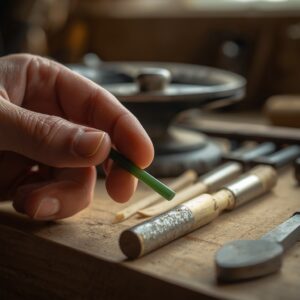 The Investment Asset
 Understanding why premium dop wax for gem faceting commands respect in the lapidary community requires understanding the economics of the craft itself. A single piece of fine rough gemstone material can represent an investment of tens, hundreds, or in the case of fine alexandrite, demantoid garnet, or Paraíba tourmaline, thousands of dollars. The cutter who places that material on a dop stick is accepting full responsibility for its integrity from that moment forward. Every variable that can be controlled must be controlled, because the variables that cannot be controlled, internal fractures, natural cleavage planes, heat-sensitive inclusions, are unforgiving enough without adding a wax that slips, melts unevenly, or releases prematurely mid-session. The wax stocked at Lapidary Hub is selected specifically because it removes adhesion and release from the list of uncontrolled variables. When you know your wax will behave predictably, you can focus entirely on your angle settings, your lap sequence, and your stone.
The provenance of quality lapidary wax runs through a long tradition of craft chemistry. The best modern formulations are descended from the shellac-based dopping compounds popularized by mid-century American gem cutting clubs and the Federation of Australian Mineralogical Societies, organizations whose technical bulletins on dopping technique are still referenced today. What modern chemistry has added to that tradition is consistency. Where vintage shellac sticks varied batch to batch in their amber content and plasticizer ratios, contemporary dop wax for gem faceting is produced under quality-controlled manufacturing conditions that deliver the same melt point, the same viscosity, and the same adhesion strength in every stick. That consistency is what allows a faceter working a delicate 3-millimeter melee parcel to use the same wax with the same technique as a cutter working a 40-carat citrine preform. The wax scales with the task because the formulation is stable.
It is also worth noting that professional-grade dop wax for gem faceting has a recognized place in the value chain of finished gemstone goods. Trade buyers, bench jewelers, and gem dealers who source custom-cut stones from independent lapidary artists increasingly ask about cutting methodology as part of their quality assessment. A cutter who can document the use of professional dopping materials, controlled transfer dopping techniques, and appropriate release procedures is communicating something meaningful about their commitment to craft standards. This wax is not merely a supply item. It is part of the professional identity of a serious lapidary practice, and sourcing it from a dedicated lapidary supplier like Lapidary Hub is itself a statement about the quality of work you intend to produce.
Condition Metrics and Machine Specifications
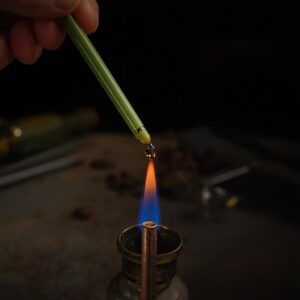 Condition
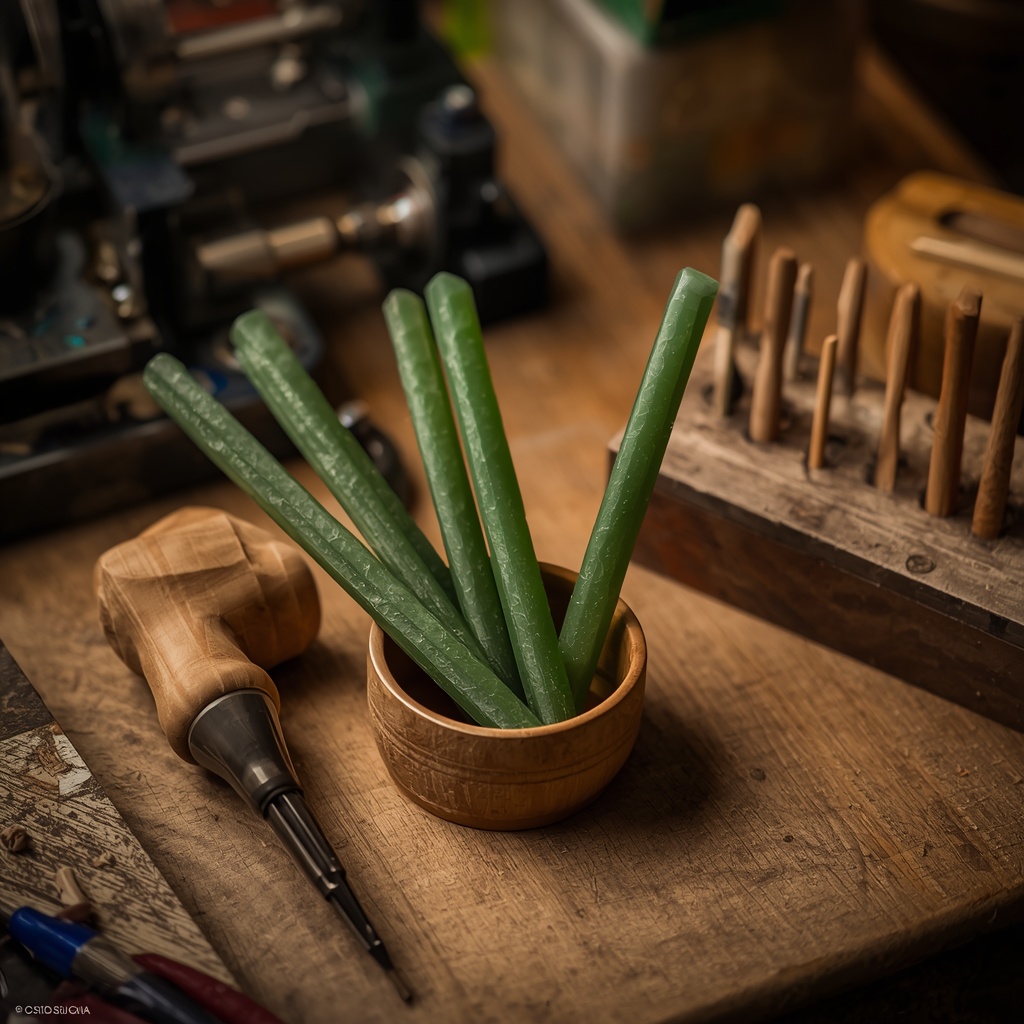
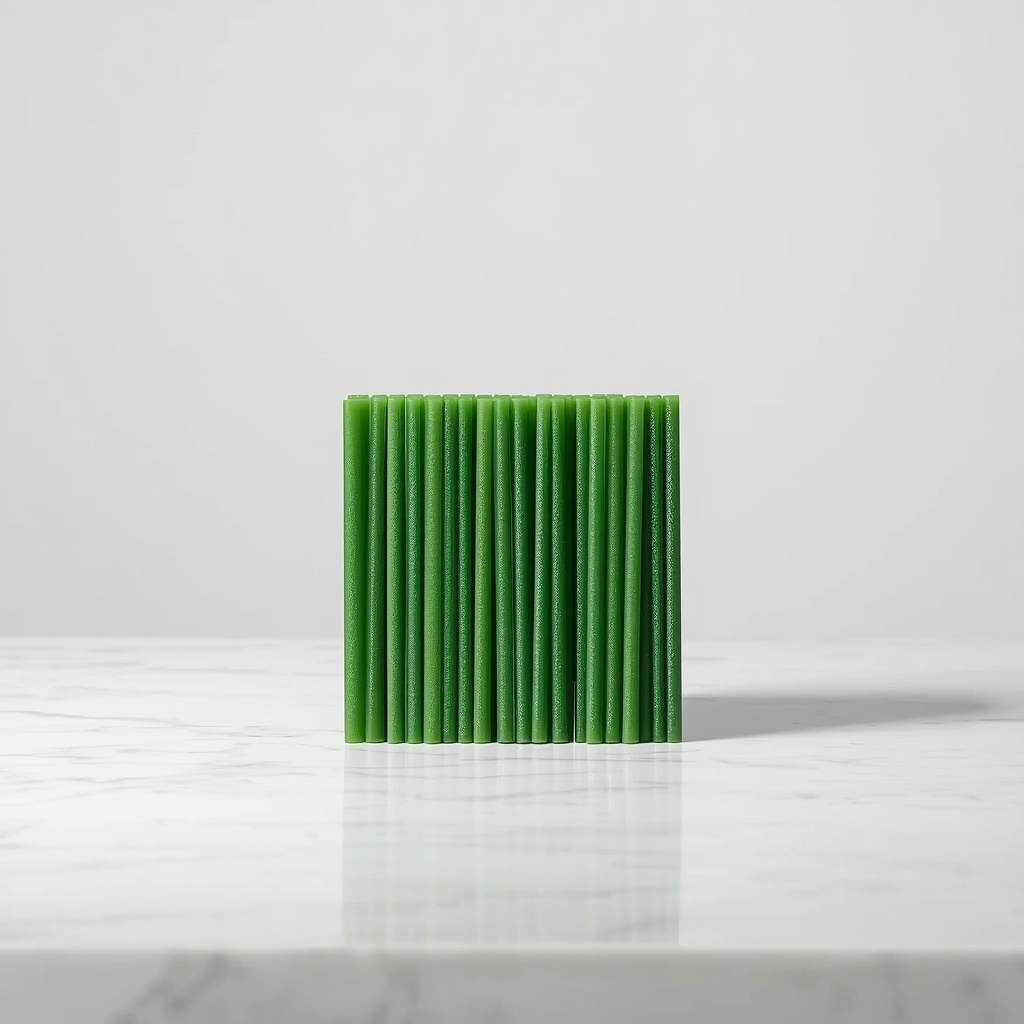
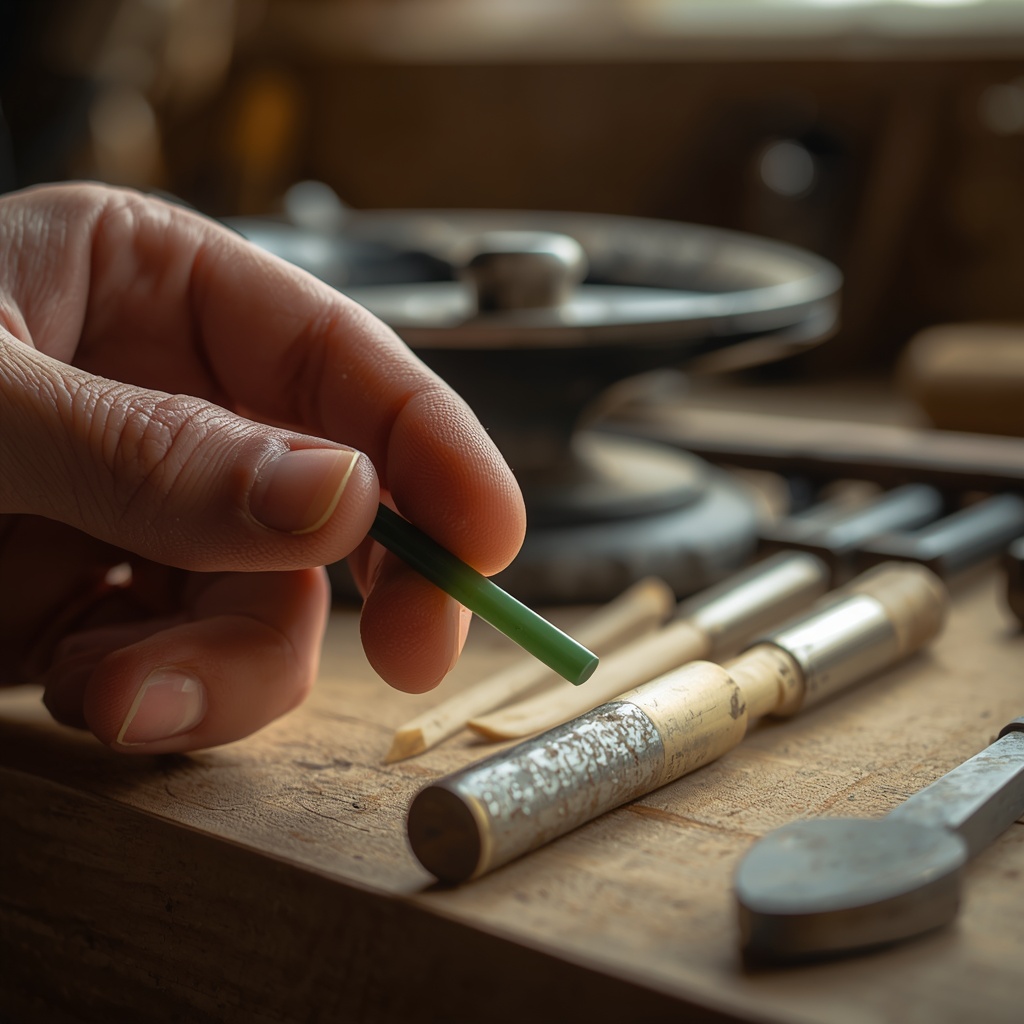
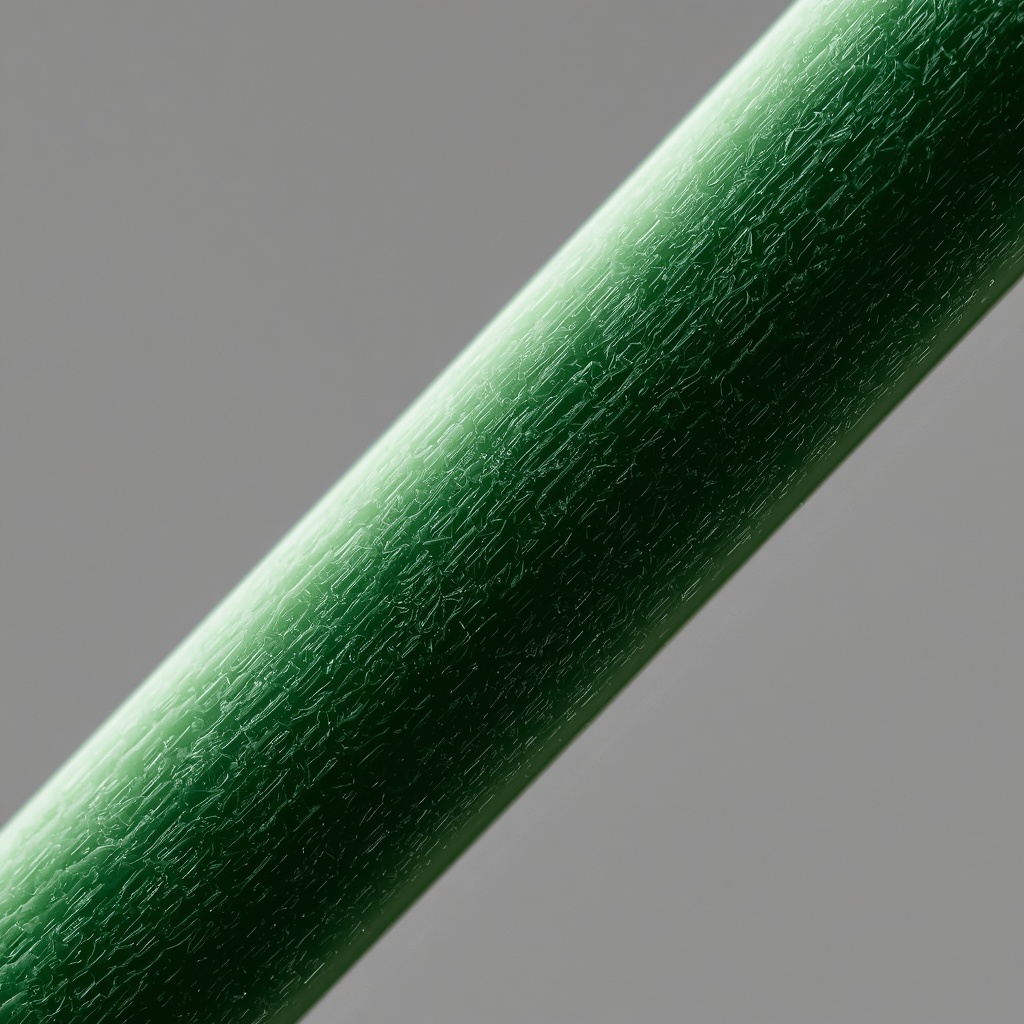
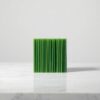
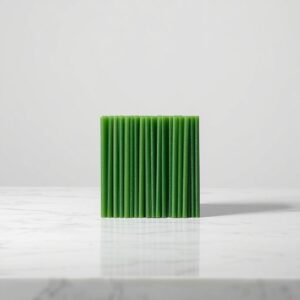
Dop wax for gem faceting is a consumable material rather than a durable machine, and its performance specifications are therefore expressed in terms of physical and chemical properties rather than mechanical tolerances. Understanding these properties is essential for selecting the correct wax for your specific application, your specific stones, and your specific working environment. The product available in this listing is a standard green lapidary dop wax formulation, the most widely used grade among production faceters and experienced hobbyists for good reason. It performs across the broadest range of common gemstone materials and ambient workshop temperatures, making it the logical default choice before exploring specialty formulations for extreme heat sensitivity or unusually large stone weights.
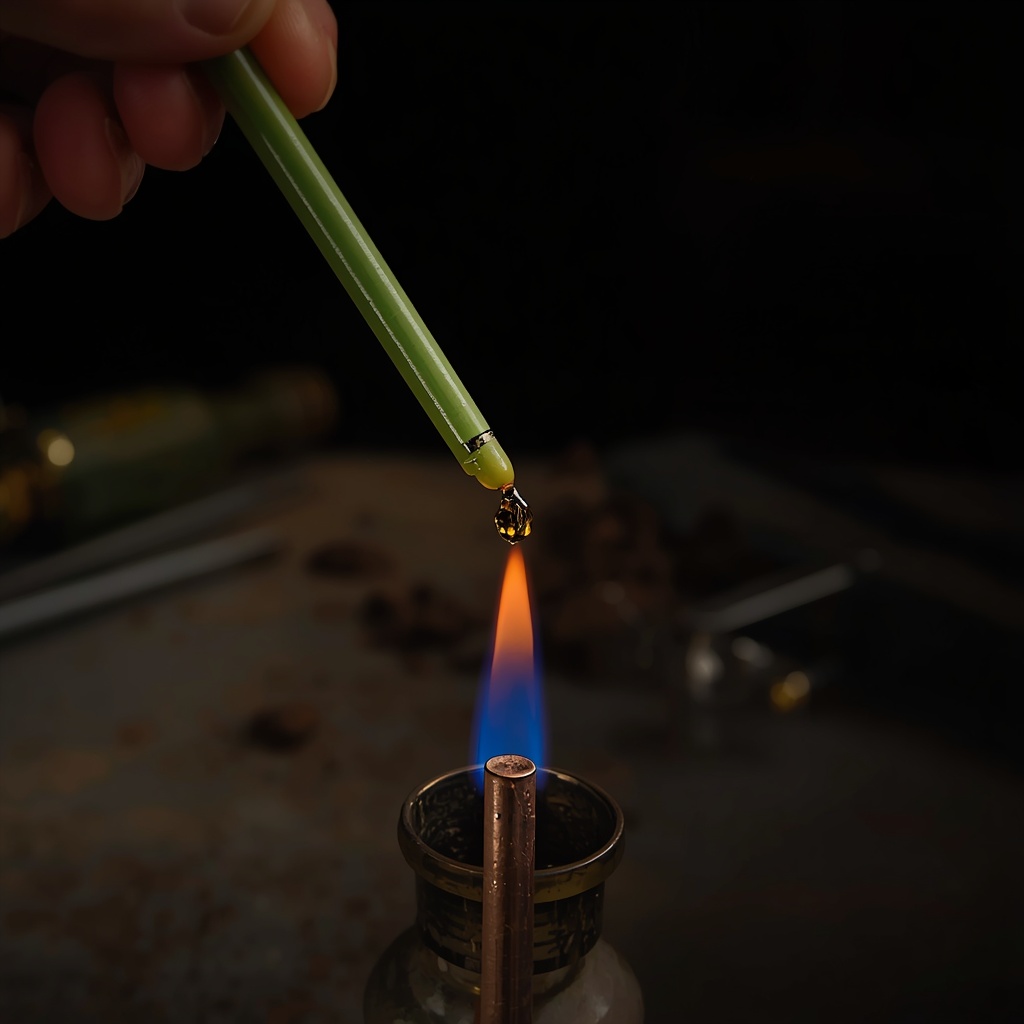
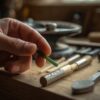
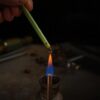
Melt Temperature and Working Range: This wax is formulated to melt cleanly in the range of approximately 65 to 75 degrees Celsius, achievable with a standard alcohol lamp, a dop wax warmer, or a temperature-controlled hot plate. Within this range the wax flows smoothly enough to seat a stone securely without requiring prolonged heat exposure that could stress heat-sensitive materials such as tanzanite, opal doublets, or emerald with significant fracture filling. The working window, the period during which the wax remains plastic enough to seat and align the stone before it sets, is sufficient for the precise positioning that faceting demands without being so long that the stone drifts before the wax cools.
Adhesion Strength and Rotational Stability: Once fully cooled, this dop wax for gem faceting achieves an adhesion strength appropriate for sustained grinding at standard faceting machine speeds, typically 0 to 600 RPM depending on lap type and stone size. The cured wax resists lateral shear forces generated during grinding strokes while maintaining a bond that does not fatigue during extended sessions. Stones seated correctly in this wax do not creep, meaning the critical alignment established during dopping is preserved through pre-forming, grinding, and polishing without the cutter needing to re-inspect the dop angle between facets.
Release Characteristics and Transfer Dopping Compatibility: Clean release is as important as strong adhesion. This wax releases from both the stone surface and the dopping stick cleanly when remelted to working temperature, leaving minimal residue on the pavilion surface. The release behavior is predictable enough that experienced faceters can complete transfer dopping operations, bonding the polished pavilion to a new stick while maintaining precise alignment of the table, using this wax as the transfer medium without introducing alignment error. Any residual wax on the stone after release is soluble in common lapidary cleaning solvents and does not require mechanical removal that could scratch polished facet junctions.
Color and Identification
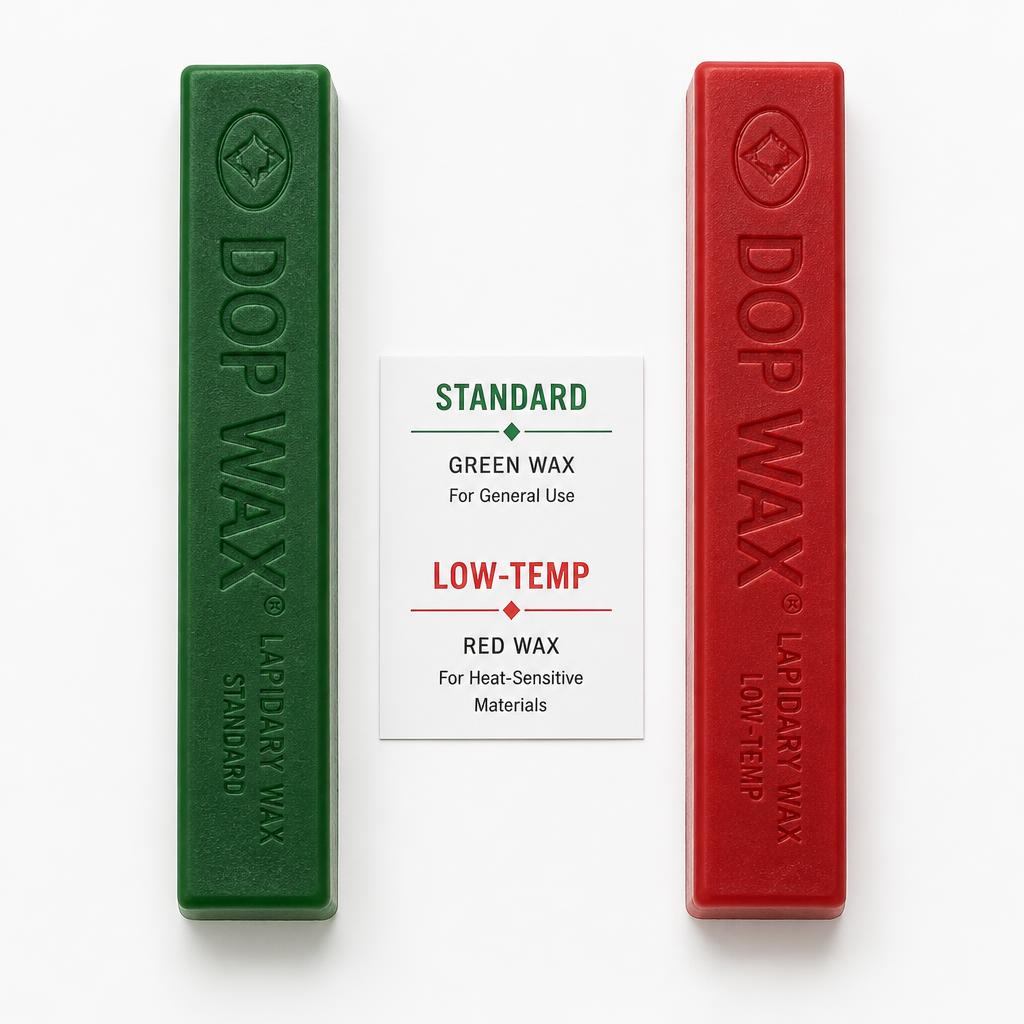
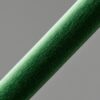
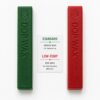
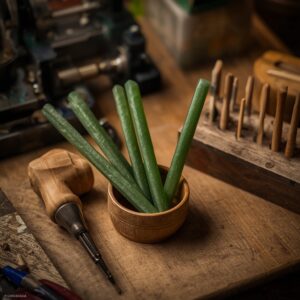
The standard green color of this lapidary dop wax is an industry convention that assists in quick visual identification during multi-wax bench setups where cutters may also use low-temperature red wax for heat-sensitive stones or black shellac stick for specialty applications. The green formulation is understood throughout the lapidary community to indicate a standard-temperature, general-purpose compound, making it immediately recognizable to any experienced cutter who joins your workshop or inspects your dopping setup.
Storage and Shelf Life
Dop wax for gem faceting in stick or block form has an indefinite shelf life when stored correctly. Keep this product away from prolonged direct sunlight, which can soften certain plasticizer components over time, and away from temperature extremes that cause repeated expansion and contraction cycles in stored stock. At room temperature in a covered storage container or the original packaging, this wax will perform identically in three years as it does today. Purchase in quantities that support your production pace without concern for product degradation.
Secure Vault Logistics and Our Fulfillment Guarantee
 Secure Vault
 Lapidary Hub approaches the fulfillment of every order, whether the contents are rough gemstone material, precision cutting equipment, or consumable supplies like dop wax for gem faceting, with the same commitment to protected delivery and customer confidence. We understand that lapidary practitioners depend on their supplies arriving in usable condition, on a schedule that keeps their bench productive, and with the assurance that any problem will be resolved without argument. The logistics process described in this section applies to all orders dispatched from our facility and reflects our long-standing commitment to being a supplier that serious lapidary artists can rely on without second-guessing.
Every order containing dop wax for gem faceting is dispatched with full insured freight coverage. The declared value of the shipment reflects the retail replacement cost of the contents, meaning that in the statistically unlikely event of carrier loss or significant transit damage, your financial exposure is zero. We select shipping carriers based on their documented performance in our shipping corridors, and we track every consignment from dispatch to delivery confirmation. For orders above a specified threshold value, which is clearly indicated at checkout, we require signature on delivery to ensure that the package is received by a person at your address rather than left unattended in conditions that could compromise temperature-sensitive materials. This is particularly relevant for dop wax shipments during summer months in warm climates, where extended exposure in a hot delivery vehicle or on an unshaded doorstep could soften the wax in its packaging.
Before dispatch, every batch of dop wax for gem faceting stocked at Lapidary Hub undergoes pre-shipment functional testing conducted by an experienced member of our team. This testing involves melting a sample from the batch on a standard dop stick and verifying that the melt temperature, flow characteristics, and cooling behavior match our established performance benchmarks. Only batches that pass this verification are released for sale and fulfillment. This step may seem exceptional for a consumable supply item, but it reflects our understanding that a single batch of off-specification wax can ruin irreplaceable gemstone material and destroy hours of skilled labor. We test so that you can trust. In the event that a product does not meet your expectations upon receipt, our damage claim process is straightforward. Contact our support team within 48 hours of delivery with photographic evidence of the issue, retain the original packaging until the claim is resolved, and we will issue either a replacement shipment or a full refund at your election, no return of the original product required for clearly defective consumable goods. We do not route damage claims through extended review processes designed to discourage resolution. Our reputation as a lapidary supplier depends on being the kind of business that solves problems immediately, and that is precisely the business we intend to remain.
We invite you to continue building your lapidary supply inventory by exploring the full collection of lapidary accessories and consumables available at https://lapidaryhub.com/product-category/lapidary-accessories/ where you will find everything from polishing compounds and lapping films to dopping sticks, transfer jigs, and faceting machine accessories curated for the same standard of craft this dop wax represents.
FAQ
What temperature does this dop wax melt at?
This dop wax for gem faceting melts cleanly between approximately 65 and 75 degrees Celsius. You can reach this temperature comfortably using a standard alcohol lamp, a purpose-built dop wax warmer, or a temperature-controlled hot plate. Staying within this range protects heat-sensitive gemstones while giving you enough working time to seat and align your stone before the wax sets.
Is this wax suitable for heat-sensitive stones like opal or tanzanite?
Standard green dop wax for gem faceting performs well with most common gemstone materials including quartz varieties, feldspar, and corundum. For exceptionally heat-sensitive stones such as opal doublets, tanzanite, or heavily fracture-filled material, we recommend using a low-temperature red dopping wax or a cold-set adhesive specifically formulated for delicate material. If you are unsure, test on a piece of similar material before committing fine rough.
Can I use this wax for transfer dopping?
Yes. This dop wax is fully compatible with standard transfer dopping procedures. Its predictable melt behavior and clean release characteristics make it suitable for bonding the polished pavilion to a transfer dop while maintaining precise table alignment. Residual wax after release is minimal and soluble in common lapidary cleaning solvents. Buy dop wax for gem faceting
How much wax do I need per stone?
The amount of dop wax per stone depends on the size of your dopping stick and the weight of the preform being supported. For standard round dop sticks used with stones between 5 and 20 millimeters, a small amount melted into a dome roughly twice the diameter of the stick end is sufficient. Larger stones and heavier preforms require a more substantial wax seat to distribute the mechanical load across the bond area. Buy dop wax for gem faceting
Does this wax leave residue on my finished stone?
When melted and released under correct temperature conditions, this dop wax for gem faceting leaves only trace residue on the pavilion surface. Any remaining wax is easily removed using a cotton swab dampened with isopropyl alcohol or a dedicated lapidary cleaning solvent. Mechanical removal is unnecessary and should be avoided on polished facets. Buy dop wax for gem faceting
How should I store dop wax between sessions?
Store your dop wax sticks or block at room temperature away from prolonged direct sunlight and away from heat sources that could cause the wax to soften in storage. A covered container, a drawer, or the original packaging is ideal. Properly stored, this wax has an indefinite shelf life and will perform identically years after purchase. Buy dop wax for gem faceting
Can this wax be used with wooden dopping sticks as well as metal ones?
Yes. This dop wax for gem faceting bonds effectively to both traditional wooden birch dopping sticks and modern aluminum or brass metal dop sticks. The adhesion mechanism relies on the wax flowing into the surface texture of the stick material as it cools, and both wood and metal provide sufficient surface area for a secure bond under normal cutting conditions. Buy dop wax for gem faceting
What is the difference between green and red dopping wax?
Green dopping wax is a standard-temperature general-purpose formulation suitable for the majority of gemstone materials cut at typical workshop temperatures. Red dopping wax is a low-temperature formulation designed for heat-sensitive stones that cannot tolerate the melt temperature required to liquefy green wax. Most lapidary benches stock both, using green as the default and red for exceptions requiring extra thermal care. Buy dop wax for gem faceting
Is this product safe to use indoors?
Dop wax for gem faceting is designed for indoor workshop use. Melting the wax with an alcohol lamp or wax warmer in a normally ventilated workspace produces negligible fumes for short-duration sessions. We recommend basic ventilation such as an open window or bench fan as standard good practice for any lapidary activity involving heated materials. Extended production sessions in enclosed spaces without air movement should be avoided as a general precaution. Buy dop wax for gem faceting
How do I know when my stone is correctly seated in the wax?
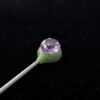
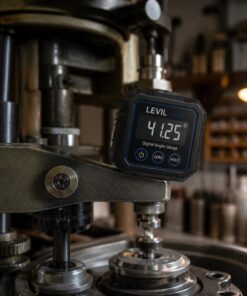
A correctly seated stone sits centered on the dop stick, with the pavilion or cabochon back embedded in the wax at the angle you have chosen for cutting. When viewed from the side the stone should not tilt relative to the stick axis, and when viewed from above the stone should be centered rather than offset. Gently pressing and rotating the stone in the molten wax before it sets, then holding it steady until the wax firms, ensures consistent alignment. For faceting work, verify the dop angle against your machine’s angle gauge before beginning pre-forming. Buy dop wax for gem faceting
Only logged in customers who have purchased this product may leave a review.
Related products
Lapidary Accessories
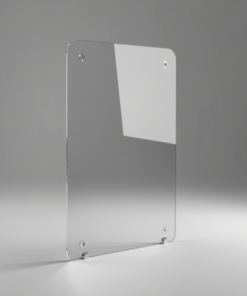
Lapidary Replacement Splash Guard for Gem Cutting and Grinding Machine Coolant Containment

Lapidary Accessories
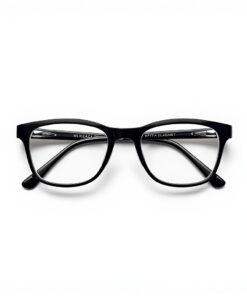
Lapidary Safety Glasses for Gem Cutting and Stone Grinding Eye Protection
Lapidary Accessories
Lapidary Water Drip System for Consistent Coolant Delivery on Gem Cutting Equipment
Reviews
There are no reviews yet.